
Energy sources and nutrient building blocks in horse feed – why, for whom and how much?
Horses require energy for various bodily functions and activities, as well as protein as a body-building nutrient. The right choice of energy sources plays a crucial role. We introduce you to the main energy sources in horse feeding and explain which horses they are suitable for and how much should be fed.
In horse feeding, fibre, fats and easily digestible carbohydrates are the main sources of energy. Each of these sources has its own specific benefits and areas of application, which we will look at in more detail below.

Fibre: the most important source of energy
Fibre consists of complex carbohydrates and is the most important source of energy for horses. It is contained in roughage such as pasture grass, hay and haylage, but also, for example, in sugar beet pulp, fruit pomace, brans and pulps. Fibre plays a central role in the diet of every horse.
Why is fibre important?
- Suitable for all horses: Fibre is essential for horses, as it not only provides energy but also satisfies the need to chew and supports digestion.
- Main source of energy: In the large intestine, fibre is broken down by microbes into volatile fatty acids, which serve as the main source of energy. Blood sugar and insulin levels are not affected.
How much fibre does my horse need?
- Recommended amount: At least 1.5 kg of hay per 100 kg body weight, which for a 600 kg horse equates to 9 to 12 kg of hay daily.
- Energy content: The energy content varies depending on the roughage; for example, early-cut hay has 7.5 MJ ME/kg, while overripe hay has 5.3 MJ ME/kg.


Fats: The specialists among energy sources
Fats are particularly important for horses with special health needs, as well as for four-legged friends that need to gain weight. Besides oil, fat is also found in seeds (e.g. linseed) and products such as linseed cake, soya flakes and sunflower seeds.
Why are fats important?
For specific groups of horses: Horses of normal weight or underweight with EMS, PSSM, ECS, as well as horses prone to laminitis or gastric ulcers benefit from fats as an energy source. Horses that require slow-release, sustained energy – such as endurance horses – also gain great benefit from a high-fat diet.
Digestion and energy production: Fats are digested in the small intestine and provide around three times as much energy as grain. In doing so, they do not affect blood sugar or insulin levels.
How much fat does my horse need?
Maximum amount: A horse can consume up to 1 g of fat per kg of body mass daily – spread throughout the day. This corresponds to e. g. around 600 g of fat for a 600 kg horse. Up to this upper limit, the amount of fat is determined by energy requirements.
Energy content: Vegetable oils contain on average 38–39 MJ ME/kg.


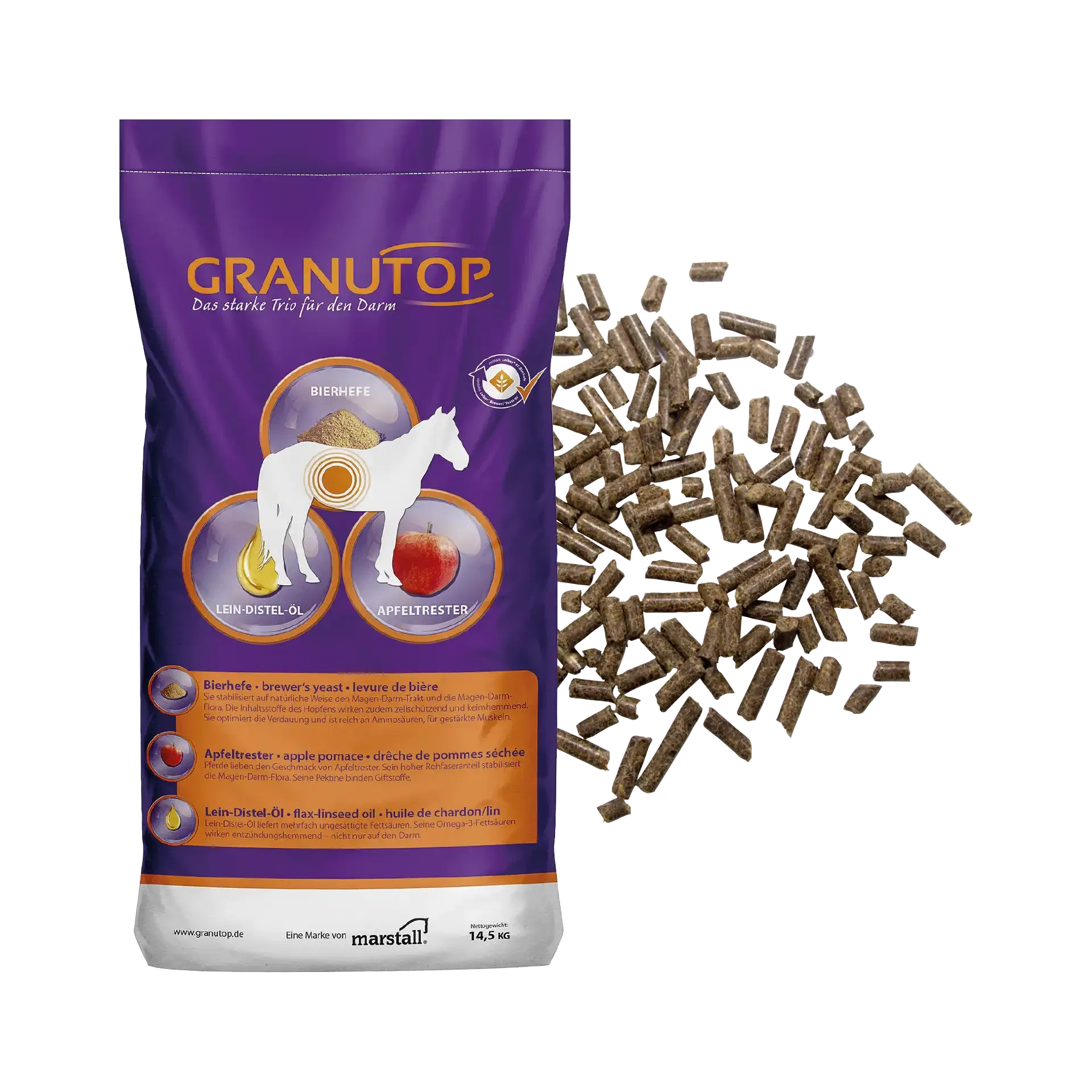
Easily digestible carbohydrates: Fast-release energy
Simple carbohydrates provide fast-release energy and are particularly important for active and sport horses. Easily digestible carbohydrates include, for example, grain starch – in oats or barley and maize as flakes. Grass, hay, molasses and fruit (ripe pears, apples, bananas, etc.) also provide plenty of sugar.
Why are carbohydrates important?
For sport and working horses: Carbohydrates – particularly grain starch – are ideal for horses that require and tolerate fast, short-term available energy. During their digestion, blood sugar levels rise and the body releases insulin. Horses with a disturbed insulin metabolism should therefore be fed a grain-free and molasses-free diet.
How many carbohydrates does my horse need?
Maximum amount: Per meal, a horse should consume a maximum of 1 g starch per kg body weight . Within this limit, the amount of grain per meal depends on energy requirements. Larger daily amounts are possible when divided into several portions. Important: maize and barley must be processed (e.g. as flakes) before feeding!
Energy content: Oats contain approximately 10.5 MJ ME/kg, maize flakes approximately 12.6 MJ ME/kg.


Body-building material: Proteins
Proteins are essential building blocks for the body – they are indispensable for building muscle and tissue. In other words: no body development without energy and protein! It’s worth knowing that only the protein that can be digested in the small intestine is available to your horse. This applies to easily digestible protein that is not strongly bound to fibre.
If your horse struggles with poor muscle development or brittle hooves and dull coat, this can be a sign of a deficiency in essential amino acids (e.g. lysine, methionine).
By the way: The muscle cell specifically uses some essential amino acids (e.g. valine) during exertion.
Why are proteins important?
For all horses: Proteins play a central role in muscle development and overall physical development. They are broken down into amino acids in the body and serve as essential building blocks, e.g. for muscles and connective tissue. For muscle formation to be optimally stimulated, the horse needs a sufficient amount of small intestine digestible essential amino acids (high-quality protein) (Loos et al., 2021).
Which protein does my horse need?
Recommended sources: Grass, brewer’s yeast, soy, rapeseed and linseed extraction meal, pea protein and amino acids in pure form. Protein from hay or chopped alfalfa is only available to the horse to a limited extent.
Special requirements: Growing horses, horses during lactation or those requiring targeted muscle development need increased amounts of small intestine digestible protein. Horses with PSSM or MFM particularly benefit from additional supplies of essential amino acids.


What does my horse need?
The right selection and amount of energy sources in horse feed are crucial for your horse’s health and performance, as well as for its overall body condition. If the hay was not cut very early, horses also need extra supplements of protein digestible in the small intestine to build up body condition and muscle. Whether fibre, fats or easily digestible carbohydrates – each energy source has its specific benefits and should be selected according to the individual needs of the horse. If your horse is “not carrying enough weight”, we recommend checking not only the feed amount, feed type, teeth and worm infestation, but also the stress level, for example due to a change of owner, relocation, weather, or herd/box neighbours. This can quickly put strain on the stomach and lead to unwanted weight loss. If you have any questions, we are happy to help!